Liver Cancer Awareness Month: What Actually Raises Your Risk, and What You Can Do About It
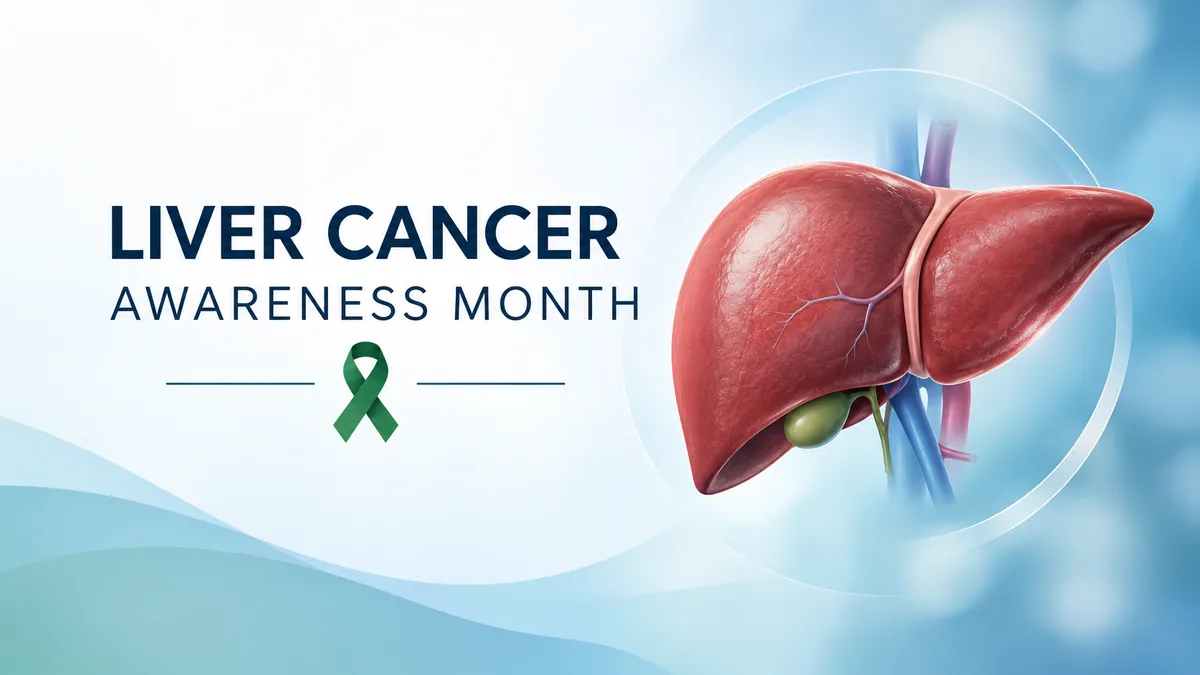


Every October, Liver cancer is deliberately brought into focus. In the United States, the American Association for Cancer Research and the American Liver Foundation both mark October as Liver cancer Awareness Month, and the Hepatitis B Foundation runs its own campaign alongside it.
The reason for the month is not sentiment. It is that almost every Liver cancer diagnosed late was a Liver cancer that could have been prevented. The Lancet Commission estimated in 2025 that roughly 60% of Liver cancers worldwide are preventable — not treatable, preventable. In India the opportunity is even larger, because the single largest driver of Liver cancer here is also the single most preventable.
So let me be direct. If you read one thing this month, make it the list at the end of this article.
What Liver cancer actually is
When people say Liver cancer, they almost always mean Hepatocellular carcinoma, or HCC — a primary cancer that arises from the liver's own cells. It accounts for the large majority of primary Liver cancers.
A separate and equally important group are secondary Liver tumours, where cancer has spread to the Liver from elsewhere, most often the Colon or Rectum. That is a different disease with a different pathway of care, and it is covered separately on this site. From here on, I am talking about primary Liver cancer.
The Liver is a remarkable organ. It is the only solid organ in the body that can regenerate. The same capacity that lets it recover from injury is also what allows a single abnormal cell to quietly build a Tumour over years without disturbing anything you would notice.
Why Liver cancer is found late
Here is the central problem with this cancer, and it explains most of the deaths.
A healthy Liver does not have pain fibres. There is nothing in a normal Liver that hurts. By the time a liver Tumour has grown large enough to stretch the capsule around the organ and cause discomfort, it has usually been there for years. Meanwhile the organ can keep doing its job — clotting, processing protein, handling metabolism — right up until it cannot.
For this reason, Liver cancer has no useful early warning signs. There is no symptom that reliably means "early Liver cancer". Any symptom you do notice has almost always appeared at the stage where the disease is already advanced.
This is not a failure of patients. It is a biological fact about the organ. And it is precisely why prevention and structured surveillance, rather than symptom-seeking, carry the weight in Liver cancer.
The risk factors in the Indian context
Globally, Hepatitis B accounted for about 39% of Liver cancers and Hepatitis C about 29% in 2022. In India the pattern is different and, for one disease, more concerning.
Chronic hepatitis B
This is the leading cause of Liver cancer in India and the one most people have never heard of. Estimates put Hepatitis B surface antigen positivity at around 3–4% of the population, which works out to more than 40 million people living with the virus in this country.
Two things make this the priority. A person with chronic Hepatitis B carries roughly a hundred times the risk of developing HCC compared to someone without it. And a large share of transmission happens before a person reaches adulthood — at birth from an infected mother, or in early childhood through shared items or unsafe injections. By the time many of them present decades later, they have no idea they were ever exposed.
cirrhosis of any cause
cirrhosis is the single strongest predictor of Liver cancer. Somewhere between 70% and 90% of Liver cancers develop in a Liver that was already scarred by something else. In cirrhotic patients in India the annual incidence of HCC is reported at around 1.6% per year.
This is why Cirrhosis of any cause — viral, alcohol-related, or metabolic — puts a person on a surveillance programme rather than on a "wait and see" plan.
Metabolic Liver disease
non-alcoholic fatty Liver disease, now often called MASLD, is the risk factor moving fastest. It is driven by obesity, type 2 diabetes, high blood pressure and metabolic syndrome, and it is rising sharply in India alongside rising body mass index and diabetes rates.
This matters because it means an increasing share of Liver cancer will develop in people with no viral infection and no alcohol history. Metabolic risk is no longer a Western problem, and a normal viral marker panel does not exclude it.
Aflatoxin and food storage
Aflatoxin is a toxin produced by certain moulds that contaminate grains and nuts, particularly when they are stored warm and damp. It is a recognised cause of Liver cancer, and it interacts with Hepatitis B in a way that is worse than either alone.
For most families this comes down to storage. Rice, wheat, maize and groundnuts kept in damp, poorly ventilated conditions are the usual route. Dry, cool, ventilated storage and discarding any grain that smells musty or has visibly moulded is a genuinely effective preventive step, and it costs almost nothing.
Alcohol and tobacco
Alcohol drives Cirrhosis, which drives Liver cancer. In Indian data, alcohol-related Liver disease has been rising fast enough that some registries now report it alongside the viral causes rather than behind them.
Tobacco is an independent risk factor as well. And there is a specific interaction worth knowing: a person with chronic Viral hepatitis who also drinks alcohol has a markedly higher risk than either factor alone. This is additive, not multiplicative, and it is not intuitive — people are often surprised by how much the combination costs them.
Can Liver cancer be prevented?
Yes, and mostly by preventing the disease that causes it rather than by detecting the cancer early.
1. Get the Hepatitis B vaccine, and check your status
This is the highest-value action available and it is permanently available. A birth dose plus completion of the vaccine series in infancy prevents the majority of infections acquired in early childhood, which is where much of India's burden begins. Adults who are not immune should be vaccinated as well.
The vaccine prevents infection. It does not treat an infection you already have. So testing matters just as much.
2. Get tested for Hepatitis B and hepatitis C
A single blood test settles whether you carry either virus. Millions of Indians live with chronic Viral hepatitis without knowing it, because these infections are silent for years.
If you are positive, this is good news in one specific sense: both are treatable. Hepatitis C is now curable with short courses of oral antiviral tablets, and in most people it is effectively a cure rather than a suppression. Hepatitis B can be controlled well with medication that suppresses the virus and substantially reduces the risk of Cirrhosis and cancer. India's National Action Plan for Combating Viral hepatitis, launched in 2018, exists precisely to make testing and treatment easier to access.
3. Drink less, and know that there is no safe amount
There is no threshold of alcohol consumption that is good for the Liver. The risk rises continuously. And if you have Viral hepatitis or existing Liver disease, alcohol is doing considerably more harm than the general population would assume.
4. Manage weight, blood sugar and blood pressure
Losing excess weight, treating diabetes and controlling blood pressure are not general wellness advice here. They are Liver cancer prevention for anyone with fatty Liver disease. This is the one risk factor on the list that is entirely within the control of an individual, and it is also the one where the population-level effect is largest.
5. Stop smoking, and store your food properly
Smoking cessation lowers the risk. Dry, cool, ventilated food storage reduces aflatoxin exposure. Neither is difficult. Both are free.
Is there a Screening test?
For the general population with no Liver disease, there is no Screening programme, and this is a reasonable position. The incidence is too low and the downstream harm of routine imaging too high to justify it.
For people at defined high risk, however, surveillance is clearly worthwhile and is standard practice. The usual schedule is an ultrasound of the Liver every six months, often combined with a blood test for Alpha-fetoprotein. Ultrasound is inexpensive, has no radiation, and is the backbone of surveillance worldwide.
Who should be on it? Generally people with Cirrhosis from any cause, people with chronic Hepatitis B who meet defined age and viral-load criteria, and people with chronic Hepatitis C with Cirrhosis. The exact thresholds are individual, and they should be set by your doctor rather than by a general rule, because they depend on your viral load, your liver's current state and your age.
Two honest limitations. Surveillance catches lesions at an earlier stage, but it is not the same as a Screening test that prevents disease. And no test is a substitute for prevention. Surveillance assumes you already have the risk factor; prevention is what stops you acquiring it.
How is Liver cancer treated?
Treatment depends almost entirely on stage, which depends on where the Tumour is, how many there are, whether the main blood vessels are involved, and how well the Liver itself is functioning. It is decided by a multidisciplinary team, not by one specialty.
- Surgical resection (liver resection): Removal of the Tumour-bearing part of the Liver. The standard curative option for an isolated Tumour in a Liver that still functions well. Keyhole techniques are used for many cases where anatomy permits.
- liver transplantation: For disease confined to the Liver and within accepted selection criteria. It replaces the diseased organ entirely, which matters because the underlying Cirrhosis is still there after a resection.
- ablation: Needle-based techniques that destroy a small Tumour in place, most often radiofrequency or Microwave Ablation. Suited to selected small lesions.
- Locoregional therapy: Transarterial Chemoembolization blocks the arterial supply to tumours while preserving the healthy Liver, and is the backbone of treatment for disease that is not operable but is confined to the Liver.
- Systemic therapy: Immunotherapy and Targeted therapy have significantly improved outcomes in advanced disease and are now first-line in many patients, replacing older Chemotherapy regimens with much better results.
The single most consequential factor is stage at diagnosis. That is why everything above this line is about prevention and surveillance, not treatment. Advanced Liver cancer is still difficult. Early Liver cancer is often curable.
What to do this month
If you take one action from this article, let it be the first one.
- Get tested for Hepatitis B and Hepatitis C if you have never been tested. One blood draw. It is the highest-yield thing on this list.
- If you are not immune to Hepatitis B, complete the vaccine course.
- If you already know you have chronic Viral hepatitis, make sure you are on a management plan with regular monitoring — and that the plan is not just "come back if you feel unwell".
- If you have known Cirrhosis or fatty Liver disease, ask specifically about whether you are due for six-monthly Liver surveillance.
- If you drink, cut back. If you smoke, stop. Both act on the Liver as well as everywhere else.
- Store your grains and nuts dry, cool and ventilated, and throw out anything that smells musty.
None of these is dramatic. That is the point. Liver cancer is one of the few cancers where the most effective intervention happens years before anyone reaches a hospital, and where the majority of cases are theoretically avoidable. Awareness Month is useful precisely because it is unglamorous: it is a reminder to get a blood test, complete a vaccine course, and throw away the rice that smells musty.
References
Sources consulted for this article.
Mondal D, Das K, Chowdhury A. Epidemiology of Liver Diseases in India. Clin Liver Dis (Hoboken). 2022;19(3):114-117.
doi:10.1002/cld.1177
Shetty VV, Kellarai A. Comprehensive Review of Hepatocellular Carcinoma in India: Current Challenges and Future Directions. JCO Glob Oncol. 2022;8:e2200118.
doi:10.1200/GO.22.00118
Lancet Commission on liver cancer prevention, 2025. https://pmc.ncbi.nlm.nih.gov/articles/PMC12705118
Ministry of Health and Family Welfare, Government of India. National Viral Hepatitis Control Program (NVHCP). https://www.nhp.gov.in/national-viral-hepatitis-control-program-(nvhcp)_pg
American Association for Cancer Research. Liver Cancer Awareness Month. https://www.aacr.org/patients-caregivers/awareness-months/liver-cancer-awareness-month
American Liver Foundation. National Liver Awareness and Liver Cancer Month, October. https://liverfoundation.org
Hepatitis B Foundation. Liver Cancer Awareness Month. https://www.hepb.org/what-is-hepatitis-b/liver-cancer-and-hepatitis-b/liver-cancer-awareness-month
Centers for Disease Control and Prevention. Liver Cancer Basics. https://www.cdc.gov/liver-cancer/about/index.html
American Cancer Society. Causes, Risks and Prevention of Liver Cancer. https://www.cancer.org/cancer/types/liver-cancer/causes-risks-prevention/prevention.html
National Cancer Institute. Liver (Hepatocellular) Cancer Prevention (PDQ). https://www.cancer.gov/types/liver/hp/liver-prevention-pdq
Frequently Asked Questions
It is an observance held every October by organisations including the American Association for Cancer Research, the American Liver Foundation and the Hepatitis B Foundation. Its purpose is to raise awareness of Liver cancer risk, of the Viral hepatitis infections that cause most cases, and of the fact that a large proportion of cases are preventable.
Not in every case, but a large share is preventable. The Lancet Commission estimated around 60% of Liver cancers worldwide are preventable, and the levers are known: Hepatitis B vaccination, Hepatitis C testing and cure, limiting alcohol, avoiding tobacco, managing weight and blood sugar, and reducing aflatoxin exposure through proper food storage. In India this matters more than average because chronic Hepatitis B is the leading cause of Liver cancer here.
Some Liver cancers are curable. A small isolated Tumour in a well-functioning Liver can be removed surgically, and disease confined to the Liver within accepted criteria may be treated by transplantation. Advanced disease is not usually curable but treatment has improved substantially, and Immunotherapy and Targeted therapy now give many patients years of good-quality life. Stage at diagnosis is the single biggest determinant of outcome, which is why prevention and surveillance matter more than any single treatment.
A healthy Liver has no pain fibres, so a growing Tumour causes nothing noticeable until it is large enough to stretch the capsule surrounding the organ. Meanwhile the Liver can keep functioning normally for a long time. By the time a symptom appears the disease is usually advanced. This is why there is no symptom worth waiting for, and why testing and surveillance in people with known risk factors are so important.
No. For people with no Liver disease there is no recommended Screening programme, because Liver cancer is uncommon enough in that group that routine imaging would cause more harm than good. Surveillance is recommended for people at defined high risk, usually those with Cirrhosis of any cause, and those with chronic Hepatitis B or Hepatitis C who meet specific criteria. The usual test is an ultrasound of the Liver every six months, often with an Alpha-fetoprotein blood test. Ask your doctor whether your situation meets the criteria.
It is a well-established vaccine and given as part of routine immunisation in India. The birth dose matters because a large share of transmission occurs at or around birth, and completing the series in infancy prevents most infections acquired in early childhood. Adults who are not immune should also be vaccinated. One important distinction: the vaccine prevents infection, but it does not treat an infection already present, which is why testing for existing Hepatitis B remains essential.
Yes. Hepatitis C is now curable with short courses of oral tablets, and for most people this is a genuine cure rather than ongoing suppression. Even patients who already have Cirrhosis can frequently be cleared of the virus, which substantially reduces their risk of Liver cancer. In the majority of patients treatment achieves a sustained virological response, which means no virus is detectable afterwards.
Aflatoxin is a toxin made by certain moulds that can contaminate grains, nuts and oilseeds, especially when they are stored warm, damp and poorly ventilated. Chronic exposure is a recognised cause of Liver cancer, and it works synergistically with Hepatitis B, meaning the combined risk is greater than either exposure alone. Prevention is largely practical: store rice, wheat, maize, groundnuts and spices dry, cool and ventilated, use airtight containers, do not keep grain for long periods in humid conditions, and discard anything that smells musty or shows visible mould.
Yes, and this group is growing. Non-alcoholic fatty Liver disease, now often called MASLD, is driven by obesity, type 2 diabetes, high blood pressure and metabolic syndrome, and it is rising sharply in India. It can progress to Cirrhosis and then to Liver cancer. Important detail: it can occur in people who neither drink nor have any viral infection, so a normal hepatitis panel does not rule out Liver cancer risk. Weight loss, good blood sugar control and blood pressure control are the interventions that reduce risk.