Bloating: What It Means, What May Help, and When to Get Checked
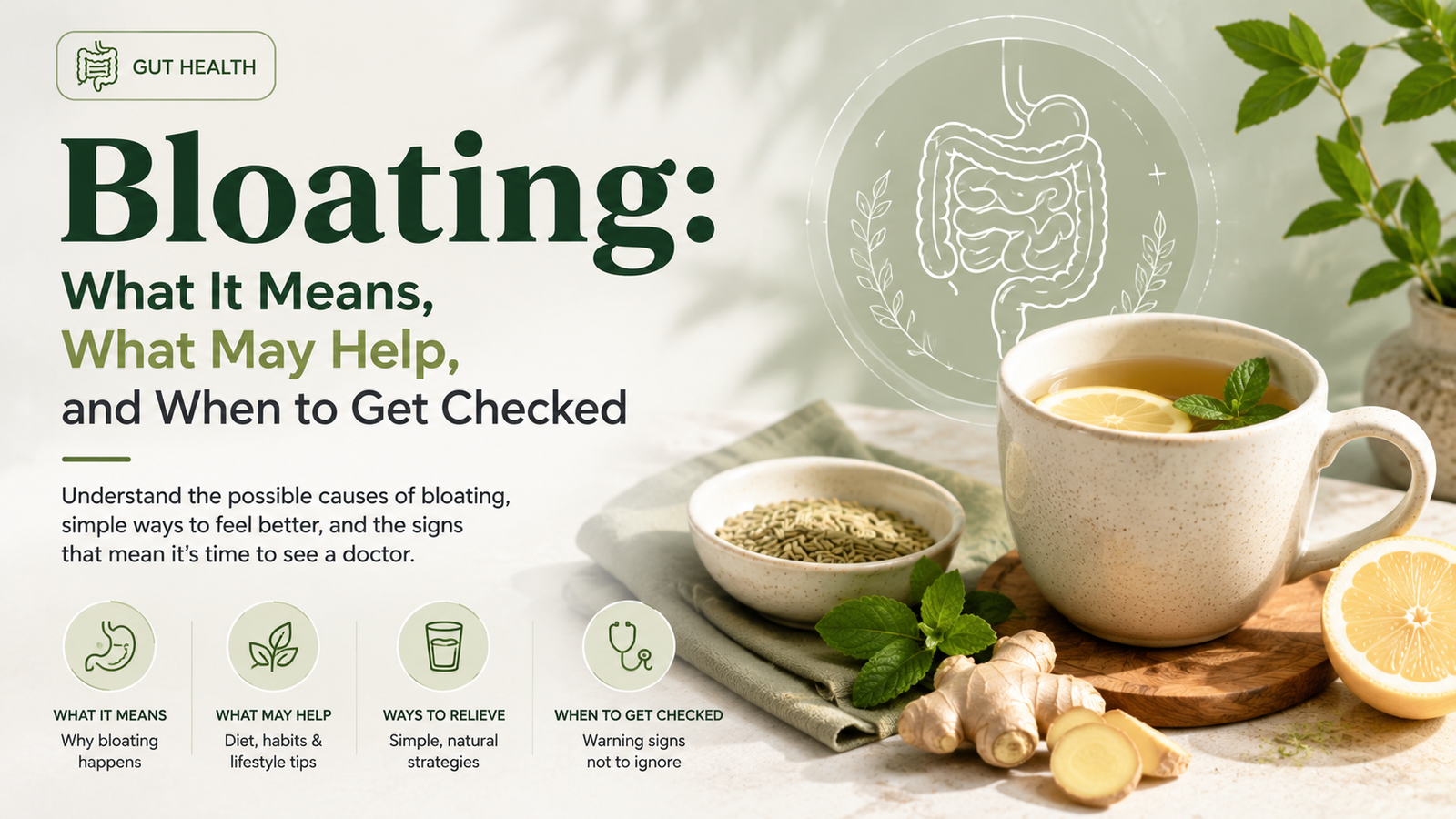


Bloating is common and can make the abdomen feel full, tight, pressured, or "filled with gas," causing discomfort. However, it is a symptom, not a diagnosis.
Bloating is often related to treatable issues such as constipation, food-related sensitivities, or irritable bowel syndrome (IBS). However, new, persistent, or worsening symptoms need attention.
Bloating and distension are not the same
Bloating is the sensation of pressure, fullness, or tightness, while abdominal distension means the abdomen visibly or measurably becomes larger.
Why does bloating happen?
Several factors can contribute, sometimes at the same time:
- Constipation or incomplete bowel movements
- IBS and other gut-brain disorders
- Certain foods, large portions, or poorly absorbed carbohydrates
- Eating quickly, carbonated drinks, chewing gum, or sugar-free sweets
- Increased sensitivity to normal digestive stretching
- Slower movement of food, stool, or gas
- Altered coordination of the diaphragm and abdominal muscles
- Stress affecting gut sensitivity and movement through the gut-brain connection
How is bloating evaluated?
A clinician will ask about abdominal enlargement or fullness, bowel habits, pain, nausea, vomiting, early satiety, meal-related triggers, medicines, supplements, prior abdominal or pelvic surgery, weight and appetite changes, and menstrual, pelvic, or urinary symptoms.
They will examine the abdomen and may perform a pelvic or rectal examination when indicated. Tests depend on the findings and may include blood or stool tests, pregnancy testing, ultrasound or other imaging, Endoscopy or colonoscopy, and breath or motility tests. Not everyone needs advanced testing.
Warning signs: seek medical advice
Arrange medical assessment for new, persistent, worsening, or disruptive bloating, especially with:
- Unintentional weight loss
- Blood or black stools
- Iron-deficiency anaemia
- Repeated vomiting
- Severe or worsening abdominal pain
- A firm or persistently swollen abdomen
- Inability to pass stool or gas
- Reduced appetite or early fullness
- Major changes in bowel habits
- A strong family history of gastrointestinal or ovarian cancer
Treatment
Treatment depends on the cause and may include:
- Treating constipation with gradual fibre and fluids, activity, and clinician-recommended laxatives when needed
- Eating smaller meals slowly and reducing fizzy drinks, chewing gum, hard sweets, and large or rich meals
- Limiting personal triggers such as lactose, beans, onions, garlic, wheat, certain fruits, and sweeteners such as sorbitol, mannitol, and xylitol
- Keeping a one- to two-week food-and-symptom diary to identify repeatable patterns
- Trying a short, guided low-FODMAP diet if IBS or food-related bloating is suspected, followed by gradual reintroduction; work with a registered dietitian when possible
- Increasing fibre gradually, because rapid increases, especially in fermentable fibre, can worsen bloating
- Staying active and changing one or two habits at a time
Do not start a strict gluten-free diet before coeliac disease testing, as avoiding gluten can make results unreliable. Seek medical advice before using laxatives regularly or starting a restrictive diet, especially with weight loss, nutritional concerns, or a history of disordered eating.
What may not help?
There is no reliable, universal probiotic treatment for bloating. Products contain different organisms and doses, and research results are inconsistent.
SIBO, or small intestinal bacterial overgrowth, may cause symptoms in some people, especially those with altered intestinal anatomy, severe motility problems, or intestinal stasis. However, bloating alone does not prove SIBO, and breath tests can be hard to interpret.
Do not use repeated antibiotics or highly restrictive diets just because bloating is present. Treatment works best when it targets the underlying cause.
The bottom line
Bloating is common, but it deserves a thoughtful approach. It is not always "just gas," and it is not automatically SIBO or cancer. Looking for the dominant pattern, constipation, food sensitivity, IBS, medication effects, or another condition, helps avoid unnecessary tests, supplements, antibiotics, and long-term dietary restriction.
If symptoms continue or worry you, talk with your clinician. An evaluation can help determine whether reassurance and simple treatment are enough or if more tests are needed.
Frequently Asked Questions
No. Gas can contribute, but bloating may also be linked to constipation, food sensitivity, IBS, gut sensitivity, slow bowel movement, or altered abdominal-muscle coordination.
Yes. Constipation can involve hard stools, straining, incomplete emptying, or a feeling of blockage, not only infrequent bowel movements. Treating constipation may reduce bloating.
Yes. Bloating is a sensation. Visible enlargement is called distension.
No. A low-FODMAP diet is usually a short-term, structured trial followed by gradual food reintroduction and a personalised long-term diet. It should not become an unnecessarily restrictive way of eating.
Not without a clear reason. Wheat contains gluten but also fructans, which may be the actual symptom trigger. Coeliac testing should be completed before starting a strict gluten-free diet because removing gluten can make the tests unreliable.
Only if dairy repeatedly triggers symptoms or lactose intolerance is suspected. Many people tolerate smaller amounts, yoghurt, hard cheese, or lactose-free milk.
Bloating alone does not mean you have cancer. However, see a doctor if it is new, persistent, or worsening, especially if it occurs with unexplained weight loss, blood in the stool, vomiting, severe pain, loss of appetite, significant changes in bowel habits, or a strong family history of cancer. In such cases, cancer is one possible cause.